
Prometheus 1000 – Combustion Control for Biomass Boilers
A microprocessor controller with a lambda sensor and fuzzy logic for complete, clean combustion.
Why combustion needs to be controlled
In any combustion process, complete burning of the fuel depends on the fuel-to-oxygen ratio. When oxygen comes from the air, atmospheric pressure (altitude), temperature and humidity all matter.
With boilers and burners that use a fixed air setting, optimal combustion is almost impossible – fuels vary, weather changes, and the boiler repeatedly fires up and shuts down once the set temperature is reached.
Controlling only the fuel changes the output power but usually makes combustion worse. That is why the amount of air must be controlled too, split into two streams:
- Primary air – fed directly into the fuel; it controls combustion and boiler output.
- Secondary air – fed into the flame or combustion chamber; it supplies the oxygen needed to burn the residual pyrolysis gases.
How Prometheus 1000 works
Prometheus 1000 controls combustion the same way modern cars control fuel burning in the engine.
Flue-gas temperature is used to stabilise boiler output. Keeping the boiler steady at the set temperature often makes extra buffer tanks (water accumulators) unnecessary.
Test results
Fig. 1 shows a complete burn of a biomass boiler (baled straw) controlled by Prometheus 1000, with stabilised flue-gas temperature and stabilised residual oxygen. The burn runs from 15:30 to 21:00.
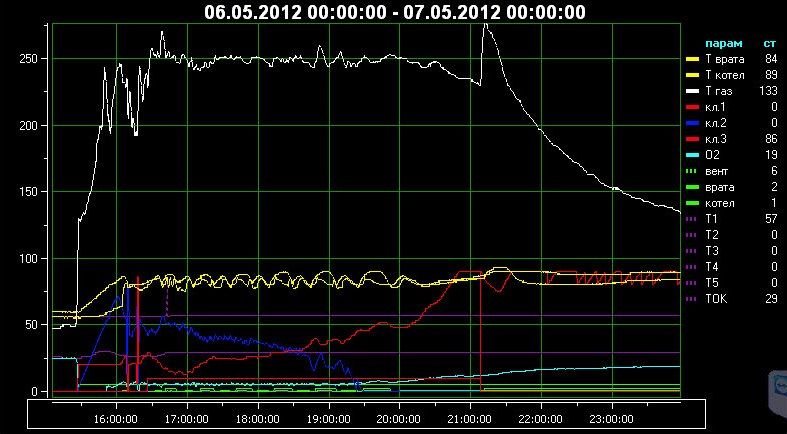
Fig. 1 – full burn with Prometheus 1000
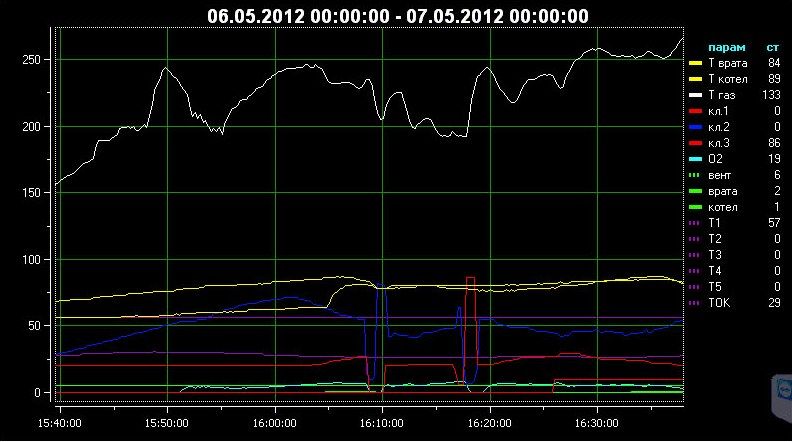
Fig. 2 – artificial anomalies at 16:10 and 16:18
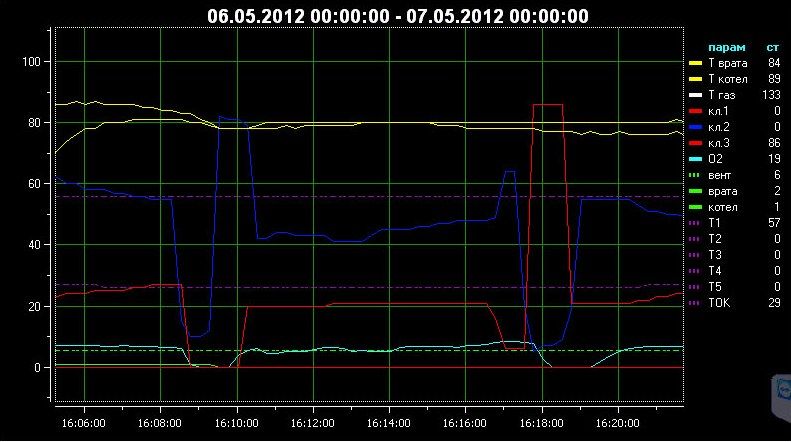
Fig. 3 – the same anomalies at a larger scale
Two artificial anomalies were created during the test:
- 16:10 – valve 1 (primary air) closed and valve 2 (secondary air) opened: an oxygen-rich combustion chamber (Photo 1).
- 16:18 – valve 1 fully opened and valve 2 fully closed: an oxygen-lean combustion chamber (Photo 2).
Photos 3 and 4 show the chimney and the combustion chamber during normal controlled burning.
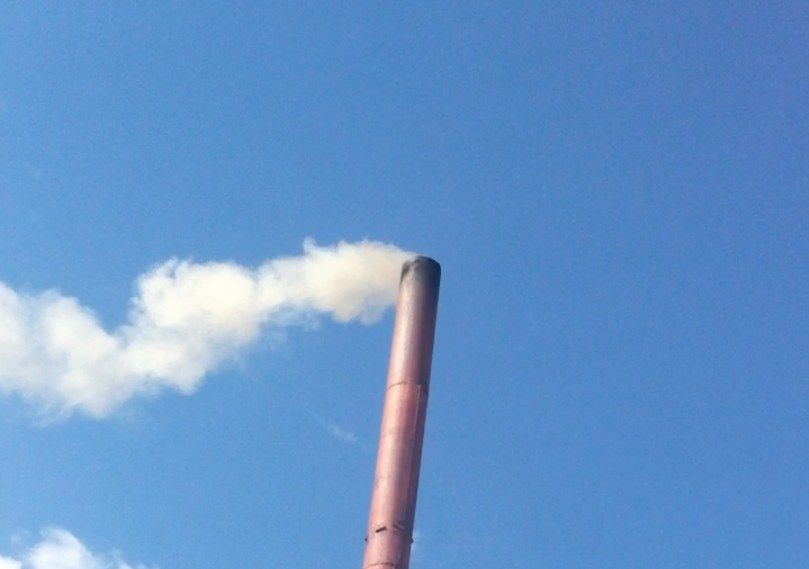
Photo 1 – oxygen-rich
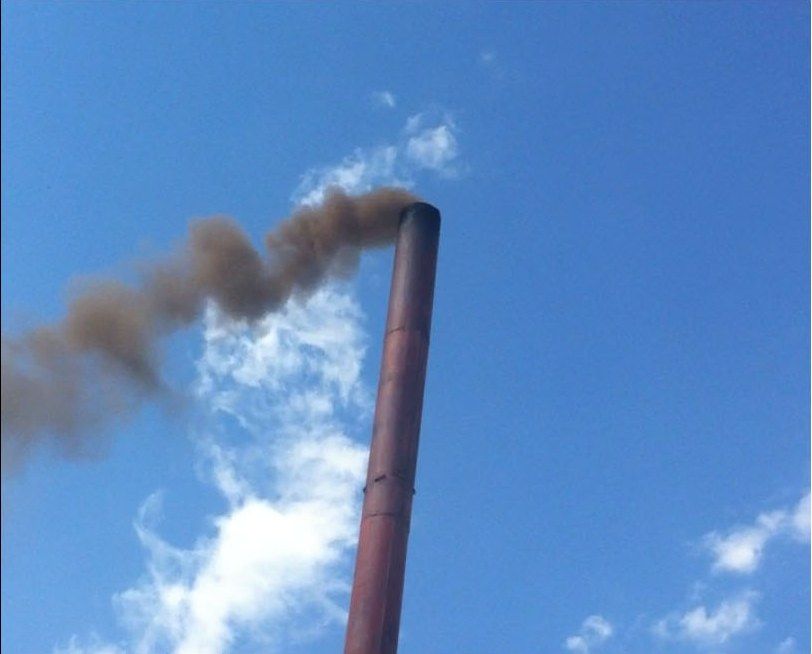
Photo 2 – oxygen-lean
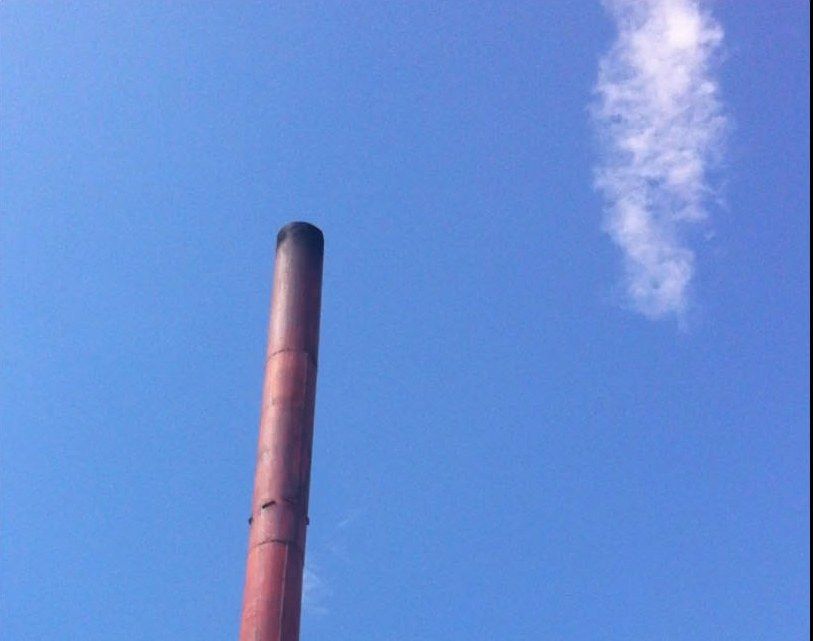
Photo 3 – normal burning
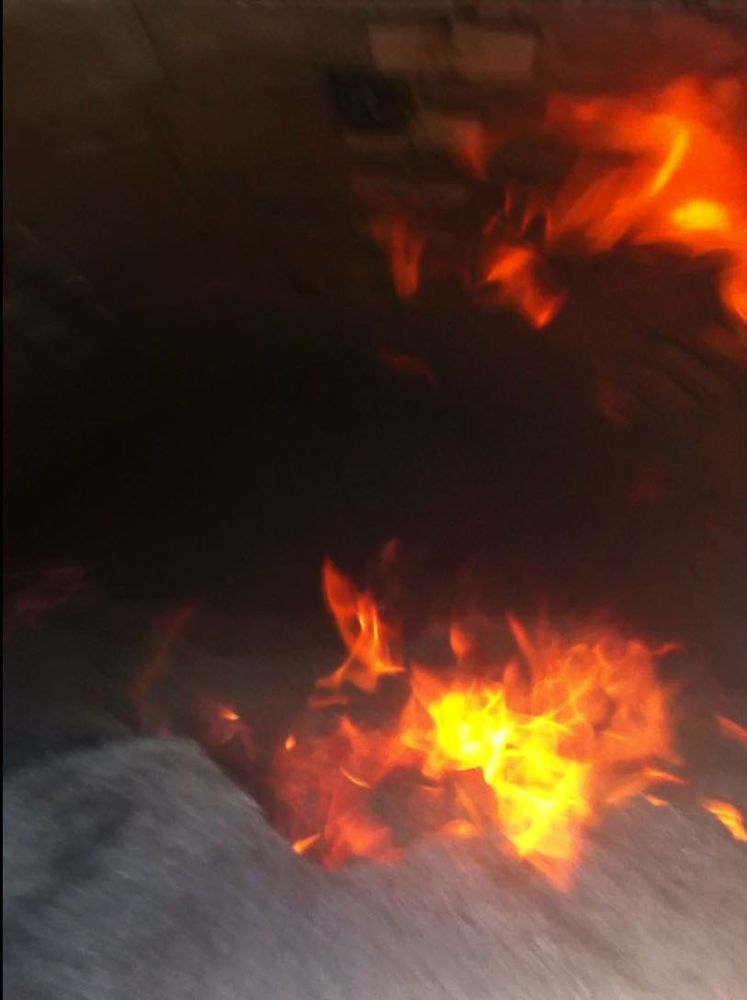
Photo 4 – combustion chamber
Logs from boilers in operation
Logs from two boilers of different size and design – in the village of Enina and in Kazanlak. The first fires up more vigorously; the second heats up more gently. Air is supplied at three points: primary air is split into two streams (valves 1 and 3), and secondary air is controlled by valve 2. As the fuel runs out, valve 1 or 3 is fully open and valve 2 is closed. Both installations work with a 20-tonne vertical water storage tank.
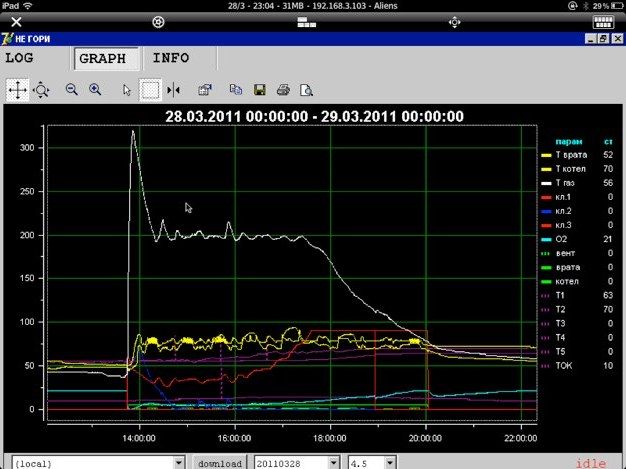
Boiler in Enina
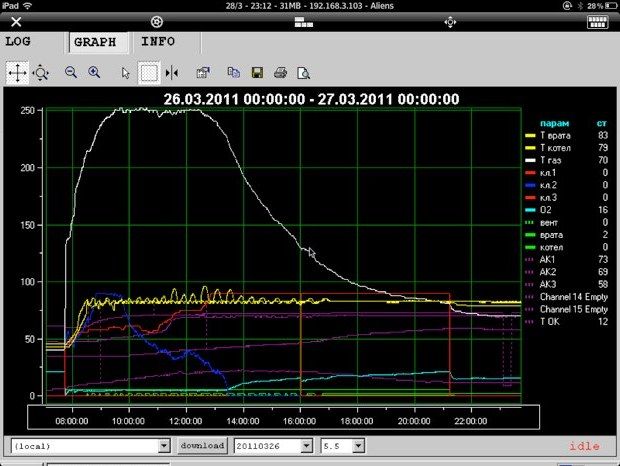
Boiler in Kazanlak
Lambda and fan controller
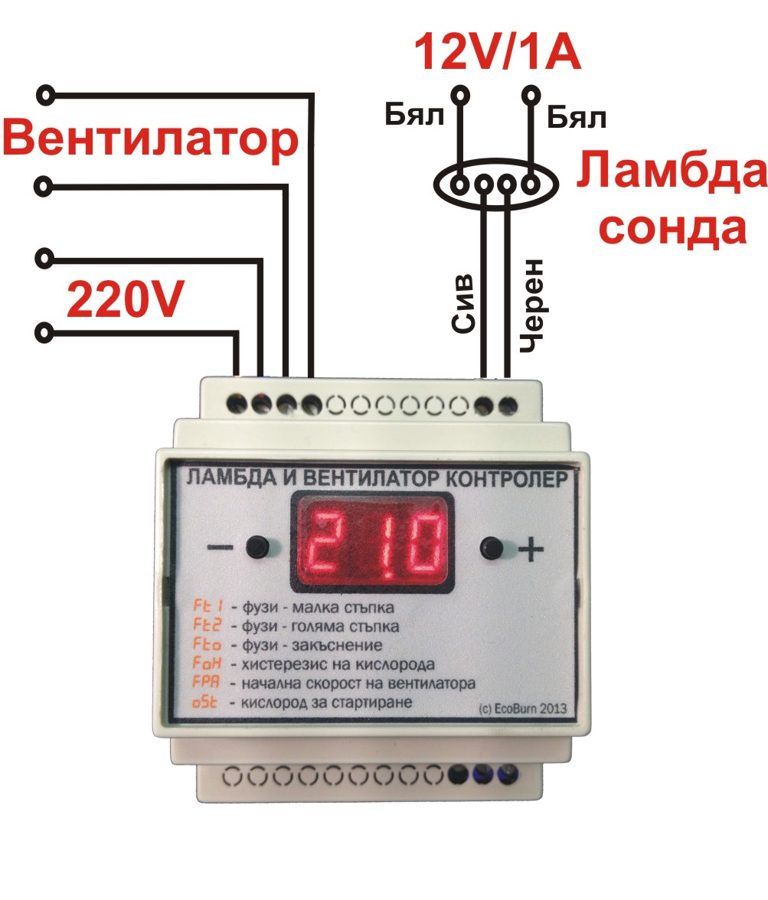
Wiring: 220 V supply, fan, lambda sensor (12 V / 1 A heater)
A compact DIN-rail controller that keeps oxygen at a set level by controlling secondary air. It measures the lambda sensor voltage and drives a single-phase fan using fuzzy logic.
Parameters
- Ft1 – small fuzzy-logic step – a small change (in %) to fan speed
- Ft2 – large fuzzy-logic step – a large change (in %) to fan speed
- Fto – fuzzy delay – the interval for processing sensor data and adjusting the fan
- FoH – oxygen hysteresis – a window around the set value within which control is considered successful
- FPA – initial fan speed after power-up
- oSt – oxygen level at which the control algorithm starts
Operation
- Two buttons, “+” and “–”, on the front panel.
- Main screens: current oxygen (e.g. 21.0) and current fan speed (e.g. 100).
- Short press of both buttons – set the target oxygen / fan speed.
- Long press of both buttons – enter parameter setup.
- After 5 seconds without input the controller returns to the current oxygen screen.